
By Wisconsin Bay News Staff
Illinois has once again positioned itself at the forefront of progressive criminal justice reform — and once again, critics are asking whether the state is moving faster than the public can reasonably evaluate the long-term consequences.
This week, J.B. Pritzker signed the so-called Clean Slate bill into law, creating a system for the automatic sealing of certain nonviolent criminal records without requiring individuals to file a petition or appear before a judge. Supporters say the measure will remove barriers to employment and housing. Skeptics argue it trades transparency and public trust for administrative convenience.
What the Law Does
Under the new law, many nonviolent criminal records in Illinois will be sealed automatically after a waiting period, provided the individual meets eligibility requirements. Once sealed, these records will no longer be visible to the general public, landlords, or most private employers.
Backers frame the reform as a “second-chance” policy, claiming that old records — even for low-level offenses — can permanently sideline people from the workforce. But automatic sealing marks a sharp departure from the traditional, case-by-case judicial review process that has historically balanced rehabilitation against public safety and transparency.
Automatic Relief, Minimal Oversight
One of the central concerns raised by critics is the lack of individualized judicial review. Rather than requiring a judge to weigh factors such as patterns of behavior, repeated offenses, or community impact, the law relies on automated eligibility criteria.
From a center-right perspective, this raises red flags. Courts exist to exercise judgment, not to rubber-stamp outcomes through algorithms. Removing that layer of scrutiny risks undermining confidence in the justice system — especially for victims who may feel their experiences are being quietly erased from public record.
Public Safety and Employer Concerns
While the law applies only to nonviolent offenses, opponents note that “nonviolent” does not necessarily mean “harmless” or “irrelevant,” particularly for positions involving trust, access to vulnerable populations, or financial responsibility.
Small businesses, landlords, and nonprofit organizations often lack the resources to conduct extensive background investigations beyond standard checks. Automatically sealing records may limit their ability to make informed decisions — shifting risk from the individual to the broader community.
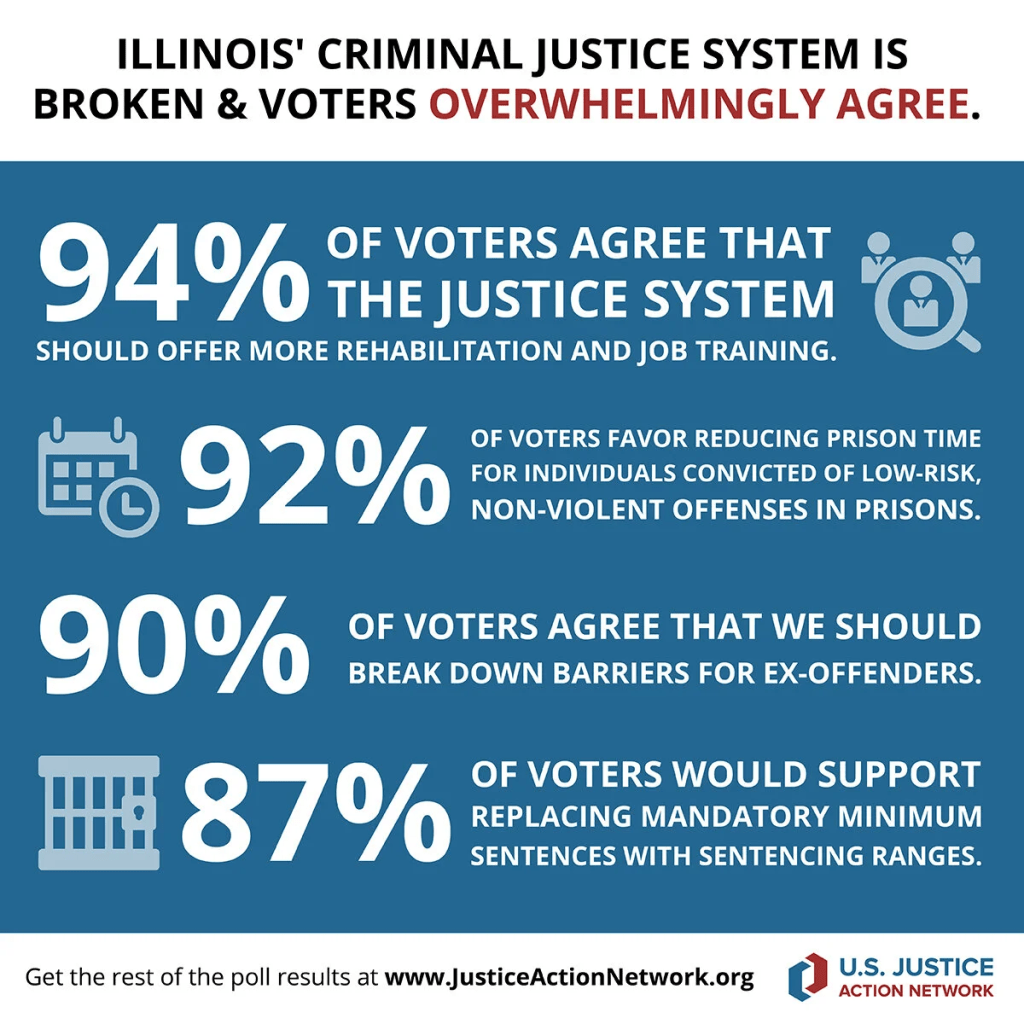
A Pattern in Illinois Governance
The Clean Slate law also fits into a broader pattern under the Pritzker administration: ambitious statewide reforms implemented rapidly, with assurances that benefits will outweigh unintended consequences — consequences that are often dismissed as hypothetical until they materialize.
Illinois has already experimented aggressively with criminal justice changes in recent years. Critics argue the state should pause and assess outcomes before layering additional reforms on top of an already strained system.
Reform vs. Responsibility
Few dispute that people deserve opportunities to rebuild their lives. The real debate is how that goal should be pursued.
A system that balances rehabilitation with accountability typically relies on transparency, discretion, and judicial oversight. By moving toward automatic sealing, Illinois is making a bet that efficiency and uniformity are better substitutes for judgment and public visibility.
Whether that bet pays off — or creates new problems down the road — remains an open question. What is clear is that Illinois taxpayers, employers, and communities will be the ones living with the results.
Wisconsin Bay News will continue monitoring how similar policies ripple across Midwestern states — and what they mean for public safety, governance, and trust in the rule of law.
Support Independent Journalism
Wisconsin Bay News is part of the Bay News Media Network — a growing group of independent, reader-supported newsrooms covering government accountability, courts, public safety, and institutional failures across the country.
📰 Support independent journalism that isn’t funded by political parties, corporations, or government agencies
📩 Submit tips or documents securely — if you see something wrong, we want to know
Independent reporting only works when readers stay engaged. Your attention, tips, and support help keep these stories alive.
 Wisconsin Bay News
Leave a comment