By Michael Phillips | WIBayNews
From courthouse controversies to historic flooding and education upheaval, 2025 was a turbulent year for Wisconsin. While many stories drew national attention, they also revealed deeper, unresolved tensions inside the Badger State—over accountability, governance, public safety, and the growing disconnect between Madison and everyday taxpayers.
Here are the five biggest scandals and news stories that defined Wisconsin in 2025, viewed through a center-right lens.
1. Federal Prosecution and Conviction of Milwaukee Judge Hannah Dugan
Hannah Dugan
The most explosive political and legal story of the year was the federal arrest and later conviction of Milwaukee County Circuit Judge Hannah Dugan. Federal prosecutors accused Dugan of obstructing immigration enforcement by directing an undocumented defendant out a non-public courtroom exit to avoid ICE agents.
In December, a jury convicted Dugan on a felony obstruction charge while acquitting her on a related concealment count. Republicans argued the case underscored a two-tier justice system where ideological actors inside government institutions operate above the law. Democrats and progressive groups framed it as political retaliation by the Trump administration.
Regardless of perspective, the case shattered public confidence in judicial neutrality and sparked renewed calls for oversight, impeachment reforms, and clearer courthouse protocols statewide.
2. Record-Breaking and Contentious Wisconsin Supreme Court Election
Wisconsin Supreme Court
Susan Crawford
Brad Schimel
The April 1 Wisconsin Supreme Court race became the most expensive judicial election in U.S. history, with spending estimates exceeding $114 million—and possibly approaching $140 million when outside efforts were included.
Liberal Dane County Judge Susan Crawford defeated conservative former Attorney General Brad Schimel, preserving a 4–3 liberal majority on the court. National figures, including President Donald Trump and Elon Musk, were drawn into the race, turning what should have been a judicial contest into a national political proxy battle.
For many conservatives, the race symbolized the collapse of judicial restraint, as courts increasingly act as super-legislatures on abortion, redistricting, labor law, and election rules—often insulated from voter accountability.
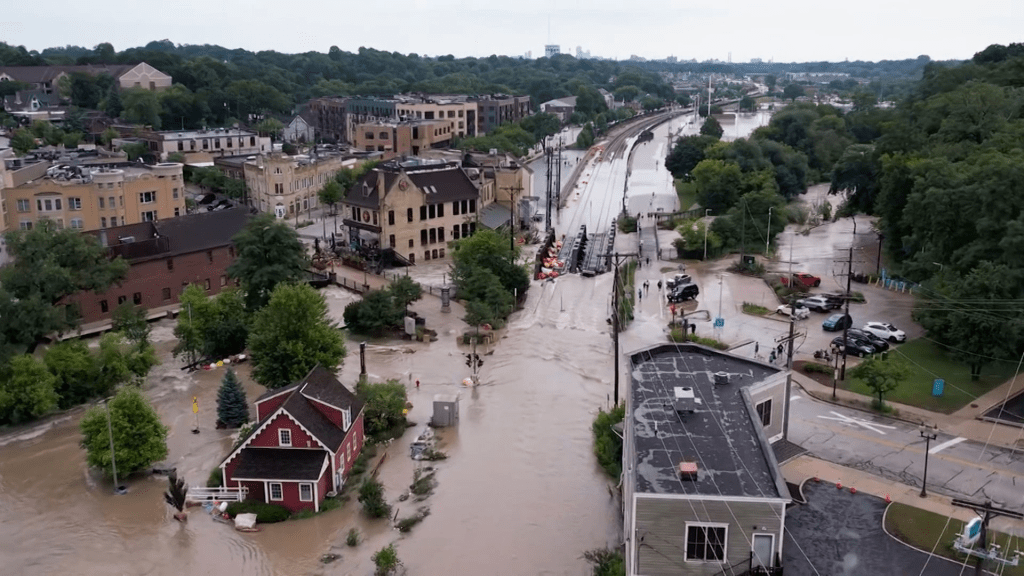
3. Catastrophic August Flash Flooding Across Southeastern Wisconsin
In August, historic storms dumped more than a foot of rain in parts of Milwaukee and Waukesha counties in just two days. Rivers crested at record levels, interstates flooded, and thousands of homes were damaged or destroyed. The final day of the Wisconsin State Fair was canceled, and at least two people died.
FEMA estimated tens of millions of dollars in residential and infrastructure damage. For many residents, the disaster raised uncomfortable questions about stormwater management, infrastructure neglect, and whether urban planning decisions made over decades left communities dangerously exposed.
The floods became a defining reminder that government competence matters most when systems are stressed.
4. School Funding Crisis and Record Property Tax Increases
Education policy erupted into a full-blown taxpayer revolt in 2025. Legislative gridlock left school districts without new state aid, triggering a 7.8% spike in school property taxes—the largest increase in decades.
Districts across the state turned to referendums just to maintain basic services, shifting costs directly onto homeowners and renters. Meanwhile, the Department of Public Instruction faced criticism over lowered academic standards, opaque financial oversight, and delayed accountability measures.
For conservatives, the crisis exposed the failure of a system that demands more money while delivering less transparency—and places the burden squarely on local taxpayers rather than structural reform.
5. Campus Tragedy and Rising Safety Concerns
University of Wisconsin–Platteville
In May, a murder-suicide at the University of Wisconsin–Platteville claimed the lives of two students, shocking the state and reigniting debates over campus safety, mental health intervention, and institutional responsibility.
The tragedy occurred amid broader national anxiety over violence, political polarization, and breakdowns in social trust. While overall violent crime declined in some Wisconsin cities, high-profile incidents like this reinforced public fears that warning signs are being missed—or ignored.
The Bigger Picture
Taken together, Wisconsin’s top stories of 2025 reveal a state struggling with credibility and confidence in its institutions. Courts appear politicized, elections increasingly nationalized, taxpayers squeezed, and public systems strained by both natural disasters and human failure.
As Wisconsin heads toward pivotal elections in 2026, these unresolved issues—accountability, transparency, and basic competence—are likely to remain front and center for voters across the ideological spectrum.
— WIBayNews
 Wisconsin Bay News
Leave a comment