By Michael Phillips | Wisconsin Bay News
A disturbing incident in Milwaukee just days before Christmas has reignited a long-simmering debate in Wisconsin: whether the state’s mental health commitment laws, designed to protect civil liberties, now too often fail to protect the public—and the very people they are meant to help.
The case centers on a 27-year-old woman whose family says they pleaded for intervention during an obvious mental health crisis, only to watch the system stand down until something went wrong. When it did, the consequences were serious: four young children were placed at risk, and the woman herself now sits in jail, awaiting a competency evaluation instead of receiving treatment.
A crisis seen—and missed
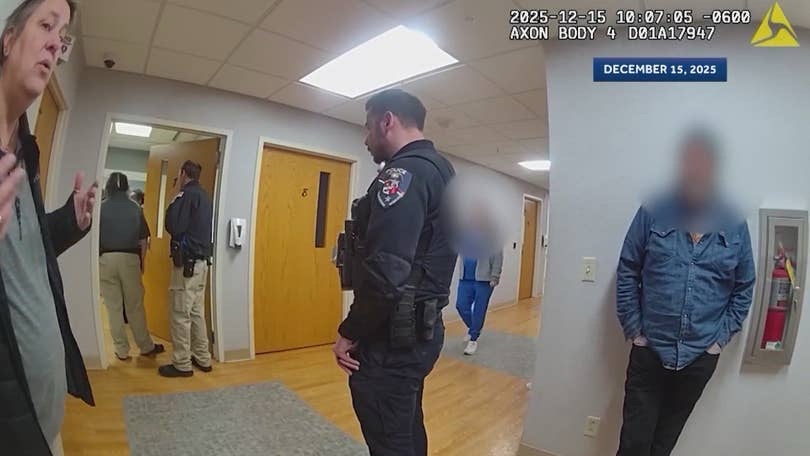
According to an investigative report aired by WISN 12 News and republished statewide, the woman voluntarily sought mental health treatment in Wauwatosa on December 15. Police body-camera footage reportedly shows erratic, delusional behavior—banging on walls, standing on furniture, and making grandiose statements suggesting a break from reality.
Her mother begged officers to place her under an involuntary emergency detention, warning that her daughter could harm herself or others. Officers declined, explaining that Wisconsin law sets a high bar: mental illness alone is not enough; there must be a clear, substantial probability of imminent harm.
The next day, the woman signed herself out of the facility.
Hours later, near Appleton and Burleigh streets in Milwaukee, she allegedly stole a running daycare van—with four children still inside. Police stopped the vehicle about 13 minutes later. The children were unharmed. The legal charges are not minor.
The uncomfortable irony
Now comes the bitter irony that many families quietly recognize: the woman may receive more consistent mental health supervision in jail than she did in the community.
Her mother has said plainly that, as painful as it is, jail may be the safest place for her daughter right now. That is not a radical statement—it is an indictment of a system that defaults to punishment after the fact rather than intervention before it.
Wisconsin’s mental health commitment framework, commonly known as Chapter 51, was built in response to real historical abuses. In past decades, people were institutionalized indefinitely with little due process. Modern law rightly emphasizes voluntary treatment, individual rights, and the “least restrictive” means of care.
But cases like this raise a legitimate question: when the warning signs are unmistakable, does waiting for blood on the floor—or children in danger—really serve liberty, compassion, or public safety?
Civil liberties vs. common sense
A center-right perspective does not dismiss civil liberties. It insists on them. But it also recognizes that liberty without responsibility—and without the capacity to make rational decisions—is not true freedom.
Here, an adult in an apparent manic or psychotic state reportedly stopped taking medication, refused continued care, and then committed a serious felony that endangered children. The law treated her as fully autonomous until the moment she crossed a criminal line.
That is not humane. It is reactive.
Other states have experimented with narrower tools, such as assisted outpatient treatment—court-ordered care with judicial oversight for people with repeated crises—aimed at preventing exactly this cycle of breakdown, arrest, release, and repeat. Wisconsin has largely avoided such reforms, wary of government overreach.
Caution is warranted. Paralysis is not.
The victims rarely mentioned
Much of the coverage understandably focuses on the family’s anguish and the failures of the mental health system. What receives less attention is the reality faced by the daycare worker and the four children whose ordinary day turned into a police stop.
Public policy cannot ignore them. Compassion must extend not only to those in crisis, but also to innocent people placed at risk when systems fail to act.
A call for targeted reform—not slogans
This case does not prove Wisconsin’s mental health laws are “broken.” It suggests they may be incomplete.
The answer is not mass institutionalization, nor is it pretending that severe mental illness always resolves itself voluntarily. The answer lies in careful, evidence-based reform that allows earlier, temporary intervention when warning signs are clear—paired with strict due process protections and regular judicial review.
Waiting for a crime is not compassion. It is abdication.
As this case moves toward a competency evaluation in January, Wisconsin lawmakers would be wise to resist reflexive talking points—on either side—and instead confront the harder question this family’s story forces us to ask: should the law protect liberty only after harm occurs, or should it also protect the vulnerable before it does?
For concerned citizens across Wisconsin, that debate can no longer be postponed.
 Wisconsin Bay News
Leave a comment