By Michael Phillips | Wisconsin Bay News
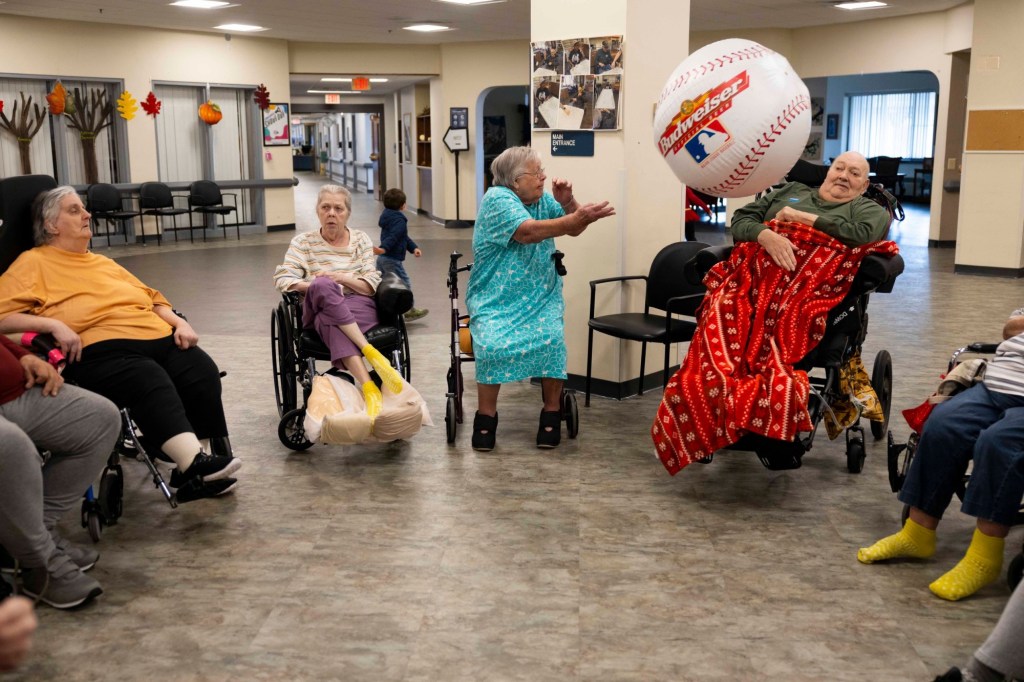
Across Wisconsin, a quiet but consequential shift is underway. County-owned nursing homes—long treated as public trusts for society’s most vulnerable—are being sold to for-profit operators. Supporters frame the move as fiscal realism. Critics hear something far more unsettling: the same logic that once justified private prisons and outsourced justice is now being applied to elder care.
A recent report by the Wisconsin Examiner chronicles grassroots efforts in rural communities to stop this trend, focusing on two flashpoints: a nearly century-old, five-star county facility in Stevens Point and a long-running public home in Merrill. In both cases, residents and families warned that privatization risks turning care into a balance-sheet exercise—where staffing, food, and dignity become cost centers.
The Wisconsin Pattern
County nursing homes have historically served as safety nets—especially in rural areas where alternatives are scarce and Medicaid access matters. Data consistently show Wisconsin’s public facilities outperform private ones on staffing and quality metrics. That’s why voters in Stevens Point twice approved tax increases (2018 and 2022) to sustain and modernize their county home.
Yet in December, despite packed hearings and public opposition, the county board approved a sale to subsidiaries of The Ensign Group, a California-based chain expanding aggressively across the Midwest. A similar sale occurred earlier in 2025 in Merrill. Within weeks, residents and workers reported layoffs in food service and maintenance—exactly the kind of “non-clinical” cuts that don’t show up immediately in inspection scores but shape daily life.
Ensign says it brings efficiency, capital, and local management autonomy. Counties argue they can’t shoulder long-term maintenance costs amid staffing shortages and uncertain reimbursements. Those points deserve consideration. But the deeper concern isn’t whether a private operator can run a facility—it’s whether profit should ever be the primary incentive in institutions responsible for human care.
Why This Sounds Like Privatizing Courts and Jails
Americans have seen this movie before. Private prisons promised savings and flexibility; instead, many delivered understaffing, higher violence, and perverse incentives to keep beds full. Forced arbitration was sold as efficiency; it quietly stripped people of their day in court.
Nursing home privatization follows the same script:
- Profit over people. When margins matter, labor is the first target. In elder care, that means fewer aides per resident, rushed care, and higher burnout.
- Reduced transparency. Public homes answer to voters and open-records laws. Private operators answer to shareholders and contracts.
- Illusory savings. Counties receive a one-time check, but downstream costs—regulatory failures, hospitalizations, closures—often return to taxpayers.
- Vulnerable populations bear the risk. The elderly, disabled, and Medicaid-dependent have the least leverage when quality slips.
This is not an argument against markets writ large. It’s a warning about where markets belong.
A Center-Right Case for Caution
Fiscal conservatives are right to scrutinize government-run enterprises. Counties face real pressures: aging buildings, workforce shortages, and unpredictable funding. But prudence cuts both ways.
Selling a high-performing public asset—especially one voters repeatedly chose to fund—raises hard questions about stewardship. If a public facility is five-star today, why gamble on a model that nationally shows higher violation rates? If rural access is fragile, why risk consolidation by chains whose incentives favor scale and payer mix?
A center-right approach should insist on guardrails before any sale:
- Binding staffing floors and transparency requirements
- Clawbacks or reversion rights if quality declines
- Independent audits with public reporting
- A genuine accounting of long-term costs, not just upfront proceeds
The Stakes
Elder care isn’t a commodity like trash hauling or snow removal. It sits closer to courts and corrections—core public responsibilities involving vulnerable people and moral obligations. Wisconsin communities understand this instinctively, which is why they’ve filled hearing rooms, funded referendums, and, in some counties, successfully blocked sales.
The question now is whether policymakers will listen. Once sold, these institutions rarely come back into public hands. And if experience with privatized justice teaches anything, it’s that efficiency claims fade quickly—while the human costs linger.
Wisconsin can be fiscally responsible without being morally careless. The line between prudent outsourcing and abandoning a public trust is thin. In elder care, crossing it should require overwhelming evidence—not just budget stress and corporate promises.
Support Independent Journalism
Wisconsin Bay News is part of the Bay News Media Network — a growing group of independent, reader-supported newsrooms covering government accountability, courts, public safety, and institutional failures across the country.
📰 Support independent journalism that isn’t funded by political parties, corporations, or government agencies
📩 Submit tips or documents securely — if you see something wrong, we want to know
Independent reporting only works when readers stay engaged. Your attention, tips, and support help keep these stories alive.
 Wisconsin Bay News
Leave a comment