By Michael Phillips | WIBayNews
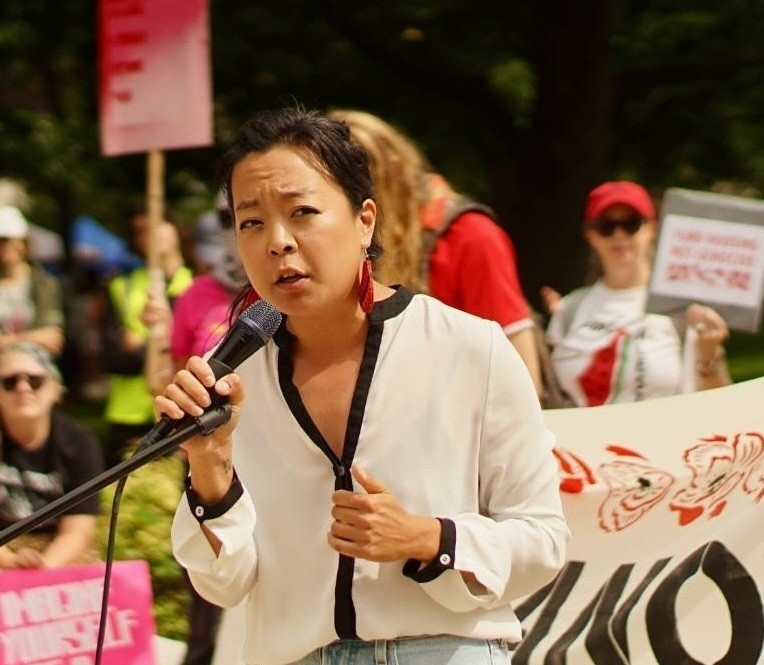
As Wisconsin heads toward an open gubernatorial race in 2026, Democratic State Rep. Francesca Hong is positioning herself as one of the most ideologically distinct—and potentially polarizing—figures in a crowded field.
Hong, 36, formally launched her campaign in September 2025 to succeed retiring Gov. Tony Evers, framing her bid as a working-class challenge to what she describes as a political system dominated by wealthy interests and incremental thinking. In a recent PBS Wisconsin interview, Hong cast the race not as left versus right, but as “working-class people versus billionaires,” arguing that Wisconsin faces a moment of “crisis and chaos” requiring bold leadership.
A Nontraditional Background—and a Clear Ideological Brand
Hong represents Madison’s 76th Assembly District and made history in 2020 as the first Asian American elected to the Wisconsin Legislature. Born to Korean immigrant parents, she attended Madison public schools, briefly enrolled at UW-Madison, and built a career in the restaurant industry—rising from dishwasher to executive chef and later co-owning Morris Ramen. She continues to work part-time as a bartender and line cook while raising her daughter as a single mother.
That personal narrative is central to her campaign messaging. Hong regularly emphasizes lived experience over résumé credentials, contrasting herself with more traditional candidates who have built careers inside government or corporate leadership.
Ideologically, she is unapologetic. Hong is a self-described democratic socialist and a member of the Wisconsin Legislative Socialist Caucus. She rejects corporate PAC donations and self-funding, relying instead on small-dollar contributions from supporters nationwide.
Policy Agenda: Ambitious—and Expensive
Hong’s platform centers on what she calls “care infrastructure,” with priorities that include:
- Universal child care
- Fully funding public education and school meals
- Expanding BadgerCare (Wisconsin’s Medicaid program)
- Paid family and medical leave
- Higher wages for care workers
- Large-scale investment in affordable housing
She argues these policies address real pocketbook pressures facing families, but critics note the platform would require substantial new revenue in a state already grappling with budget constraints, workforce shortages, and concerns about tax competitiveness.
For fiscally cautious voters, Hong’s proposals raise unanswered questions: How would universal child care be funded? Would expanded healthcare and paid leave require broad tax increases? And how would these policies affect small businesses already strained by inflation and labor costs?
Under-Examined Positions That May Matter Statewide
While Hong’s economic populism dominates headlines, several other aspects of her record receive less scrutiny—and could become focal points as the campaign intensifies:
- Public safety and criminal justice: Hong supports non-carceral approaches to crime, expanded expungement, and reforms to prison conditions. Opponents are likely to frame these positions as “soft on crime” in suburban and rural areas where public safety remains a top concern.
- Gun policy: In a state with a strong hunting culture, Hong backs “responsible gun ownership” while supporting restrictions on assault weapons and bump stocks, along with tax exemptions for gun safes and trigger locks. The balance between safety and Second Amendment rights could prove delicate.
- Foreign policy activism: Hong was a visible leader in Wisconsin’s 2024 “uninstructed” protest vote opposing U.S. military aid to Israel. While foreign policy is not a governor’s domain, this activism may resurface in a general election, particularly among moderate Democrats and independents.
A Crowded Democratic Field—and Electability Questions
The August 2026 Democratic primary remains wide open. Other declared or potential candidates include Lt. Gov. Sara Rodriguez, Milwaukee County Executive David Crowley, and State Sen. Kelda Roys. Early polling shows low name recognition across the board, with most Democratic voters undecided.
Hong’s supporters see her as a movement candidate who can energize young and progressive voters. Center-right critics, however, argue that her socialist label, Madison-centric base, and ambitious spending agenda make her a risky nominee in a purple state that narrowly backed Donald Trump in 2024.
Republicans are already signaling they would welcome a general election matchup centered on ideology, taxes, and public safety—areas where Hong’s record offers clear contrasts but also clear vulnerabilities.
The Stakes for Wisconsin
With Gov. Evers stepping aside, Wisconsin faces a pivotal choice about the direction of state government. Hong’s candidacy ensures that voters will have a clear option for sweeping progressive change rather than incremental governance.
Whether that message resonates beyond Madison and the progressive base remains the central question. As the race unfolds, Hong’s campaign will test how far Wisconsin Democrats—and swing voters—are willing to go in embracing a bold ideological turn at a time of economic uncertainty and political division.
For now, Francesca Hong stands as the Democratic primary’s most outspoken wild card—and a candidate who will force a serious debate about the future scope of government in Wisconsin.
 Wisconsin Bay News
Leave a comment