By Michael Phillips | WIBayNews
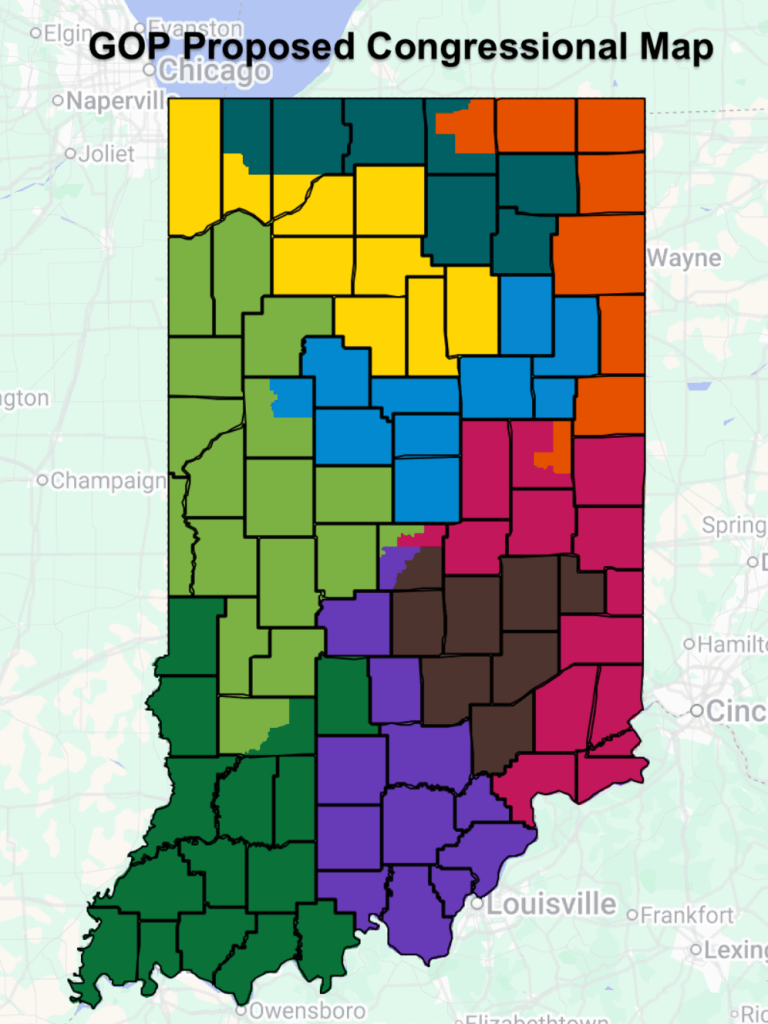
Indiana has become the latest battleground in a national political trend: courts intervening in state redistricting maps just months before critical elections. On Wednesday, the Indiana Supreme Court allowed the state’s newly drawn legislative boundaries to proceed forward—rejecting challenges from progressive plaintiffs who argued that the districts unfairly favored Republicans.
But unlike in some other states, where partisan redistricting lawsuits have thrown entire election cycles into chaos, Indiana’s decision sends a clear message: stability, predictability, and legislative authority should guide election map-making—not late-stage litigation pushed by activist legal groups.
What Sparked the Dispute
After the 2020 Census, Indiana—like every state—revised its legislative maps to reflect population changes. The Republican-led legislature approved boundaries in 2021 that maintained GOP advantages in both chambers, consistent with the state’s longstanding political composition.
Progressive organizations and Democratic voters sued to overturn the maps, arguing that the districts amounted to extreme partisan gerrymandering. But unlike states with explicit constitutional bans on political line-drawing, Indiana’s constitution puts redistricting squarely in the hands of the legislature.
This week’s ruling by the Indiana Supreme Court reaffirmed that authority.
The Court’s Core Finding: Redistricting Is a Legislative Function
In a 3–2 decision, the Court declined to strike down the maps or force lawmakers to redraw them, emphasizing that:
- Indiana’s constitution gives lawmakers—not judges—the power to draw political boundaries.
- Partisan fairness measures are not required by state law.
- Courts should not invent new standards that voters never approved through constitutional amendment.
This is a notable contrast to states where courts have aggressively inserted themselves into political fights, often with shifting or vague “fairness” criteria. Conservatives have long warned that judicial activism in redistricting undermines democratic legitimacy by transferring core legislative powers to unelected judges.
Indiana’s court agreed—at least for now.
Why This Matters for Voters in Indiana and Beyond
1. Predictable Elections vs. Constant Legal Turbulence
Indiana’s ruling helps avoid the chaos seen in places like:
- North Carolina, where maps have swung wildly every two years depending on the court’s ideological composition.
- New York, where judicial rewrites have fueled ongoing confusion.
- Wisconsin, where activists continue pushing courts to expand their reach into election administration.
The Indiana court’s message is simple: elections should not be upended by last-minute litigation funded by national organizations.
2. Upholding the Legislature’s Constitutional Authority
Redistricting is inherently political—because politics is how voters hold officials accountable. When courts override legislatures, voters lose that accountability mechanism. Indiana’s ruling reinforces that if citizens dislike a map, the remedy is at the ballot box, not the courtroom.
3. Avoiding “Judicial Gerrymandering”
Conservatives argue that replacing legislative maps with court-drawn maps is still gerrymandering—just done by judges instead of elected officials. Indiana declined to walk down that path.
What Opponents Say
Opponents of the maps argue that the ruling entrenches one-party control and denies competitive elections. But critics overlook a key fact: Indiana has been a consistently Republican-leaning state for decades. The electorate—not the maps—is driving the political outcomes.
Moreover, the plaintiffs offered no neutral, constitutional standard for courts to apply—something judges themselves noted.
Looking Ahead to 2026
The ruling means:
- Indiana’s 2024 and 2026 elections will proceed under the current maps.
- Activist groups may still seek federal intervention, though the U.S. Supreme Court has repeatedly rejected partisan-gerrymandering claims.
- The real battle will likely shift to public messaging, turnout, and candidate recruitment—not judicial policymaking.
Indiana voters will choose their leaders based on stable, court-approved boundaries. For many right-of-center citizens, that’s a win for consistency and constitutional governance.
 Wisconsin Bay News
Leave a comment